Out Heroine has been exerting entirely too much control over her life lately, and so it comes as no surprise to her that the results are so unsatisfactory & underwhelming. Y'all, William Cowper knew what ailed me back in 1779:
When I was in college I studied the English Romantics for one whole semester. All these years later, I don't remember much except Samuel Taylor Coleridge was my all-around favorite, John Keats was tragic, Lord Byron was dreamy and I didn't much care for William Wordsworth.
To my mind at the time, Wordsworth's poems were narcissistic to the point of annoyance. He filtered everything through his imagination and then had to sing about it, and I was disgusted that he wrote an autobiographical poem, The Prelude, when (to me) poems ought to be many things, but your boring autobiography was not one of them. Forgive me, Wordsworth, I was only 18, and none too intelligent.
Anyhow, I hadn't really thought about him for years, until I saw this article in City Journal in which Andrew Klavan makes the case that Wordsworth was the first "hippie" who grew up.
As the century turned, the dream of French liberty finally died. The old tyranny gave way to a new one, as Burke had predicted. To Wordsworth’s disgust, Napoleon Bonaparte became emperor and “now, become oppressors in their turn, / Frenchmen had changed a war of self-defence / For one of conquest, losing sight of all / Which they had struggled for.”
It was, for Wordsworth, what the failure of Communism was for the radicals of a later day. He could no longer deny the error inherent in “speculative schemes— / That promised to abstract the hopes of Man.” He saw the Revolution as a dream that “flattered the young, pleased with extremes” and made “Reason’s naked self / The object of its fervour.” Confused by pure reason’s failure as a moral guide, he “lost / All feeling of conviction” and “yielded up moral questions in despair.” Slowly, he began to do the brave and difficult thing: to admit he had been wrong and change his mind.
This kind of article may or may not be your thing, but it really did fire in me a new respect for old Wordsworth, and I think I will brush off my Romantics anthology and read, if not The Prelude, than at least Lyrical Ballads again. Maybe you'll feel the same way, but if not, here's a short one in his honor: "The World Is Too Much With Us" (a favorite of mine even back then).
The World Is Too Much With Us
          THE world is too much with us; late and soon,
          Getting and spending, we lay waste our powers:
          Little we see in Nature that is ours;
          We have given our hearts away, a sordid boon!
          The Sea that bares her bosom to the moon;
          The winds that will be howling at all hours,
          And are up-gathered now like sleeping flowers;
          For this, for everything, we are out of tune;
          It moves us not.--Great God! I'd rather be
          A Pagan suckled in a creed outworn;                         10
          So might I, standing on this pleasant lea,
          Have glimpses that would make me less forlorn;
          Have sight of Proteus rising from the sea;
          Or hear old Triton blow his wreathed horn.
My cousin was sad on Facebook today because she said that when she's done reading the Twilight saga, she knows she's going to be depressed that she can't escape to that world anymore. To which I say, "Hurry up and get out of that world. That world is the worst." But also, I was thinking about novels that are actually good, also very romantic, meant for grown-ups, and that have some things in common with Twilight, like a dark and brooding hero with a tragic secret; a heroine who is a little unsure of herself in new surroundings and who is wholly unaware of her effect on men, a compelling rival for the heroine's affections, and a (possibly) supernatural mystery.
Mary Stewart comes to mind as the master of this genre, but I love her lesser-known colleague Victoria Holt. Specifically, I adore the Mistress of Mellyn, which I have threatened to write about before.
This book is awesome! It's the first grown-up book I ever read outside of school. My mom gave me the Reader's Digest Condensed Version after I had finished reading Jane Eyre and was all hopped-up on old-timey Byronic heroes and the plucky heroines who save them inside stately English country homes.
Mistress of Mellyn is pulpy (the official Amazon review calls it "a delightful mix of highbrow writing and lowbrow sentiments," which sums it up perfectly) but it is as addictive as circus peanuts. Here's the plot summary:
Mount Mellyn stood as proud and magnificent as she had envisioned...But what bout its master--Connan TreMellyn? Was Martha Leigh's new employer as romantic as his name sounded? As she approached the sprawling mansion towering above the cliffs of Cornwall, an odd chill of apprehension overcame her. TreMellyn's young daugher, Alvean, proved as spoiled and difficult as the three governesses before Martha had discovered. But it was the girl's father whose cool, arrogant demeanor unleashed unfamiliar sensations and turmoil--even as whispers of past tragedy and present danger begin to insinuate themselves into Martha's life. Powerless against her growing desire for the enigmatic Connan, she is drawn deeper into family secrets--as passion overpowers reason, sending her head and heart spinning. But though evil lurks in the shadows, so does love--and the freedom to find a golden promise forever...
Oh...it is SO good. And the ball scene..I won't tell you about it, but it's every lady's fantasy (if your fantasy involves a glorious emerald green ball gown, and being kissed in the conservatory by a hunky British lord. Which you know it does.) AND it has two things going for it that Twilight doesn't: a heroine with an actual personality and...grown-ups.
Now that I'm thinking about it, they should totally make The Mistress of Mellyn into a movie, and Damien Lewis should play Connan TreMellyn. I actually think his real-life wife, Helen McCrory, would make an excellent Martha Leigh.
Hollywood, I have already done half your work for you:
Do you people remember that trio of lovely period films that starred Anthony Hopkins in the mid-90's? They were Remains of the Day, Howards End and Shadowlands. (tangent: I saw Shadowlands in the theater, and I cried so hard and loud that people got up and left my row. Not strangers, mind you, but my FRIENDS. I was that embarrassing.)
Anyhoo, those were some lovely films, and I was feeling nostalgic for that time period and those films, so I rewatched Howards End this weekend with my brother and something struck me watching it now that I was too green to notice years ago, which is how unfair the film is to Henry Wilcox and his family.
I've never read the E.M Forster novel on which the movie is based, but I assume the theme is the same as it is in the film: the conflict between Victorianism and Modernity, as the former gave way to the latter at the turn of the century. In the movie, the Wilcoxes represent the Victorians (whose time has passed) and the Schlegels represent Modernity (whose time is now). And really, I think the treatment of the Wilcoxes in the film is shameful. The Victorians had their weaknesses, as every generation does, and I am aware of what they were - but really Merchant-Ivory? Henry Wilcox's family is composed entirely of materialistic troglodytes of little honor and no graces. But of course - of course - the Schlegels are virtually perfect: humanistic, philosophical, clever and stylish. Tibby Schlegel, the Oxford-intellectual, is so wrapped up in the life of the mind that he barely realizes he has two sisters, but of course that's portrayed as only mildy vexing, and mainly charming. That's because in the film, being an intellectual is the highest virtue. However Charles Wilcox, the eldest Wilcox son, having a real talent for business, is selfish, petty and obnoxious, because being a businessman is analogous to being an Orc.
Just your average Victorian businessman.
I found the great climax scene particularly frustrating this time around. In this scene, Helen Schlegel, pregnant outside marriage, has requested she be allowed to spend the night at Howards End (the Wilcox home) before departing for Germany. Margaret, now married to Henry Wilcox, makes this request on her sister's behalf, and is refused. She makes an empassioned plea to her husband to show Helen mercy, but he will not budge.
Now, it is not that I think Henry Wilcox is in the right. He is in the wrong. But his refusal is painted as the worst possible sin (to a modern): sexual hypocrisy. Henry has had a mistress, yet he does not forgive Helen her lover.
But he is not hypocritical! He is not disowning Helen for her transgression, nor is he turning a pregnant woman out into the wilderness to starve. He makes clear to Margaret that he and Charles intend to make her seducer marry her (which we may laugh at now, but was a very honorable action for two men to take who are not Helen's blood relations) and if he is already married, to make him take responsibility for her in other ways. Henry also makes clear that he will care for Helen financially, and is willing to pay for her to stay at a hotel until she decides to leave for Germany. It is merely Howards End that is forbidden to her, and he finds her attachment to the place odd, as it is not her home and never has been. Yes, Henry himself had a mistress, but that was in Cyprus, where his transgressions affected no one's reputation. He worries only that allowing Helen to stay at Howard's End will damage his son's family in the neighborhood, and while I disagree (as does Margaret) it's not mere sexual hypocrisy that motivates him.
Perhaps I am wrong, here is the clip of that climactic scene, watch it and tell me what you think:
Was he so very wicked? Margaret thinks so, because she decides that her husband is now too, too dreadful and determines to leave him -- not displaying the teensiest bit of committment or forgiveness or empathy, despite her much-lauded humanism.
Now, I know this conflict was rather a common theme in the early 1900's. I've read Galsworthy's The Forsyte Saga, Tarkington's The Magnificent Ambersons, Ford's The Good Soldier, and Wharton's Age of Innocence which all deal with similar ideas. But those novels were not nearly so one-sided or dismissive of the Victorians as Merchant-Ivory are. Look, I think the break between the 19th and 20th century must have been something quite extraordinary. People with fine observation skills seem to have recognized at the time that a fundamental shift was underway, and a new type of man existed who had never existed before. How must the Victorians have felt, what was left of them, unprepared as they were for what constituted Modernity? (I think of poor Soames Forsyte, trying desperately to please his Modern wife in his Victorian way, and only succeeding in increasing her disgust of him.) I love to read about it, but Merchant-Ivory do not play fair.
It's like The Family Stone, (UGH!!!!) only with corsets and tophats.
So that's my beef with Howards End all these years later. However, the proposal scene is just as romantic as ever! Here's Henry, asking Miss Margaret Schlegel to marry him, with all the difficulty that a proper Victorian gentleman of great chivalry experiences when asking a fine young lady to share his life.
Oh, and all the ladies have such great hair and dresses, so the film definitely still has that in it's favor!
In King Lear (III:vii) there is a man who is such a minor character that Shakespeare has not given him even a name: he is merely "First Servant." All the characters around him-Regan, Cornwall, and Edmund-have fine long-term plans. They think they know how the story is going to end, and they are quite wrong. The servant has no such delusions. He has no notion how the play is going to go. But he understands the present scene. He sees an abomination (the blinding of old Gloucester) taking place. He will not stand it. His sword is out and pointed at his master's breast in a moment: then Regan stabs him dead from behind. That is his whole part: eight lines all told. But if it were real life and not a play, that is the part it would be best to have acted.
The book that sends me to the dictionary today is Perelandra, by C.S. Lewis. But first: I have decided that if I could write like any author who has ever lived, I would choose Lewis. Surprising, ne'st pas? But it's true. His language is modern, clear and strong, and his analogies are a source of terrible envy. They are razor sharp, and when he employs one, you always understand his concept better. He never wastes words or rambles (a terrible habit of mine), and though his writing is very rugged, he can still be beautiful.
So, something to consider today. Who would you write like if you were given the option?
In the meantime, Perelandra is no Herculean task like A Thread of Years, but I did have to look up mandrill, which Merriam-Webster defines as "a large baboon (Mandrillus sphinx syn. Papio sphinx) of central Africa west of the Congo River with the male having a bright red and blue muzzle."
The quote:
He remembers seeing the Enemy for a moment looking not like Weston, but like a mandrill, and realising almost at once that this was delirium.
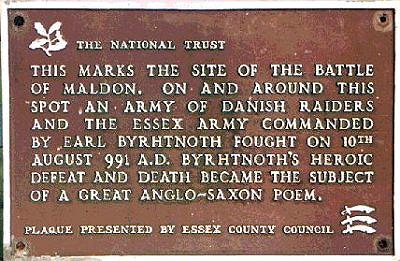
The second item I had to research was not a quote but a poem, a reference to The Battle of Maldon. Here's the reference:
Once he was actually astride the enemy's chest,, squeezing it's throat with both hands and - he found to his surprise - shouting a line out of The Battle of Maldon...
Here's a bit o' the poem:
Now room is meted you, come swiftly to us, Warriors to war. Only God knows Who at the end shall possess this fight's field.
I don't know if those are the lines Ransom shouts out during his battle with the enemy, but they seemed appropriate. If you're curious, here's the whole thing. It goes without saying that if I were to write like Lewis, I'd also need his prodigious smarts.
No, really, I'm only sort of kidding about the title of this post. It's just that I finished Ruth Rendell's A Judgement in Stone the other day (sorry I didn't write about it more quickly, I had a case of the lazies) and it was very good, but also very uncomfortable for me, which says more about me and my taste than it is a criticism of the story.
Perhaps I should pipe down and explain what the deuce I am talking about. The story is this: Eunice Parchman is illiterate, and (rather) conscienceless. Very little offends her, but her one source of shame is her illiteracy, which she has spent her whole life hiding.
She gets a job as a housekeeper at the home of a posh British family, all of them rather bookish, and (of course) they discover that she can't read, and the end result is murder. She murders them. All of them.
Now, I'm not giving anything away to tell you that she murders them all, and why, because here's the first sentence of the book: Eunice Parchman killed the Coverdale family because she could not read or write. So the book is not really a mystery in the way one normally expects. What drives the novel is the narrator describing the myriad trivial decisions, coincidences, remarks, etc., that had to happen over a span of time, in just the right way, in order for these people to come together on a particular day, in a particular frame of mind, for murder to be the end result.
The Coverdales had hundreds of chances, we learn, to escape their fate. If only they had done X instead of Y on one day, or if they had said A instead of B on this other day. But they don't have our perfect hindsight, so they don't make those alternate choices, and so they die.
Here's an example from the very beginning of the story: Eunice enlists the help her friend Annie to fake a reference for Jaqueline Coverdale, her potential employer. For the reference, Eunice gives Mrs. Coverdale the phone number of a "Mrs. Chichester," with whom she says she lives as housekeeper. The number, however, is really that of a public phone at Annie's boarding house. They wait by that same phone for Mrs. Coverdale to call, and Annie picks up and pretends to be Mrs. Chichester. A few minutes after she hangs-up, Mrs. Coverdale remembers that she ought to confirm with Eunice that she now has the job. Here is what the narrator rhetorically asks her doomed heroine:
Why not call back Jaqueline? Dial that number again now. A young man returning to his room next to [Annie's], setting his foot now on the last step of that flight of stairs, will lift the receiver. And when you ask for Miss Parchman he will tell you he has never heard of her. Mrs. Chichester, then? There is no Mrs. Chichester, only a Mr. Chichester, who is the landlord, in whose name the phone number is but who himself lives in Croydon. Pick up the phone now, Jaqueline...
"I think I had better confirm in writing."
Aaaauuugghh. So frustrating! That is the whole book. The narrator describing scenes such as this, wherein a different choice would have resulted in a much happier outcome for the Coverdale family.
Now, as a literature person, I find it fascinating how she has deconstructed the mystery novel and stood it on it's ear. But as a regular person, it made me ill. It just made me feel so very ill every time one of these critical moments was described. I kept thinking, "if only I could just warn the Coverdales..." And of course, to recognize that every tragedy is made of just such missteps, that are only seen as missteps when one is looking backwards, after the tragedy has already occurred. Perhaps I myself am now in the middle of just such a series of events, that are drawing me inexorably forward to some sort of dreadful end, but I just can't see it because the intermediary steps seem trivial and harmless...
Right ho, then. Moving on to something much more cheerful. D'you see what I mean about the book now?
I obviously need a palate cleanser, so I am both watching the BBC version of Tinker, Tailor, Soldier, Spy via Netflix, and reading The Sparrow, a science fiction novel about Jesuits. I don't know which I will discuss here first.
Update: A French director has turned this into a movie called La cérémonie. Netflix has it. Am I crazy for being curious to see it? I'm going to add it to my queue, but I'm not sure if it's a good idea...
God has paid us the intolerable compliment of loving us, in the deepest, most tragic, most inexorable sense." - C. S. Lewis
I love C.S. Lewis and he's been on my mind the last two days because I am reading Out of The Silent Planet, which is Book I of his Space Trilogy. I'll have more to say about it tomorrow, most likely, but in the meantime I was thinking of all the great quotes I've cribbed from Lewis over the years for my quote journal, and the above was a leading candidate.
Y’all. I have got serious things to read. I got sucked into another book club (memo to self: is there a book club, anywhere, that I have not, at one time, been a member of?). And, in a moment of enthusiasm brought on by calzones and two glasses of red wine, I consented to lead the next discussion of Graham Greene’s The End of the Affair.
People, The End of the Affair is no lighthearted Wodehouse romp. It’s a short gray slog through “the appalling strangeness of the mercy of God.” If I’m going to lead my fellow book pumpkins through a discussion of this wee beastie, I had better get crackin’ on it and reread it, toute de suite.
Instead, I am consuming Georgette Heyer romances like circus peanuts. They are delicious confections and I can’t stop. You know what delights me? The deliberately slang-y grammar of the British aristocracy during the Regency period. I love it. Love it! I should like very much to be so awesome that that I could negligently construct sentences such as this,
“Marry her? Eh? What does the boy want to marry her for?” asked his lordship, puzzled. “It don’t seem sense to me. First the girl’s off with him, then she has a fancy for young Comyn – [to Comyn] oh, are you there, m’boy? Well, it makes no odds – and now I’ll be pinked if she hasn’t gone off again, though whom she’s gone with this time is beyond me.”
Is that just the most awesomely silly sentence? His lordship is Lord Rupert Alastair, the old, rascally uncle of the young heart-throb marquis, and, I tell you: if the aged Lord Rupert were a real person, and we both occupied the same place in time and space, I would totally want him to be my uncle so I could have him over for brandy and copious amounts of roast mutton.
I'll be gone for the Triduum, y'all, and back blogging on Monday. I'll be celebrating great and holy things by buying out the Bare Escentuals store with my sister-in-law in Vermont. And, like last year, I leave you this very lovely and appropriate poem by the wonderful John Donne:
Death be not proud, though some have called thee Mighty and dreadful, for thou art not so, For those whom thou think'st thou dost overthrow, Die not, poor death, nor yet canst thou kill me. From rest and sleep, which but thy pictures be, Much pleasure, then from thee, much more must flow, And soonest our best men with thee do go, Rest of their bones, and soul's delivery. Thou art slave to Fate, Chance, kings, and desperate men, And dost with poison, war, and sickness dwell, And poppy, or charms can make us sleep as well, And better than thy stroke; why swell'st thou then? One short sleep past, we wake eternally, And death shall be no more; death, thou shalt die.
Incredible momentum in Part I, with all events, large and small, rushing forward to the story's horrible climax. And, like in Hardy, making the multitude of small words, choices and actions that lead to the terrible denoument seem inevitable. As if no other outcome were possible.
Hooray! Good stuff! I was gripped. And then. Meh.
Did you ever write an awesome scene, just a great little scene, and then be very, very sad that you had no novel to put it in? Well, that's what Atonement felt like to me. Like Ian McEwan wrote this fantastic little short story, "Two Figures at a Fountain," and then felt obligated to keep writing Atonement so he would have someplace to put it. Meh.
For winter's rains and ruins are over, And all the season of snows and sins; The days dividing lover and lover, The light that loses, the night that wins; And time remembered is grief forgotten, And frosts are slain and flowers begotten, And in green underwood and cover Blossom by blossom the spring begins.
I'll be gone for the Triduum, y'all, and back blogging on Monday. While I'm celebrating great and holy things by mainlining ham and manicotti in Vermont, I leave you a very lovely and appropriate poem by the wonderful John Donne:
Death be not proud, though some have called thee Mighty and dreadful, for thou art not so, For those whom thou think'st thou dost overthrow, Die not, poor death, nor yet canst thou kill me. From rest and sleep, which but thy pictures be, Much pleasure, then from thee, much more must flow, And soonest our best men with thee do go, Rest of their bones, and soul's delivery. Thou art slave to Fate, Chance, kings, and desperate men, And dost with poison, war, and sickness dwell, And poppy, or charms can make us sleep as well, And better than thy stroke; why swell'st thou then? One short sleep past, we wake eternally, And death shall be no more; death, thou shalt die.
What we mean is, like a donut, her arrival gives us pleasure, and her departure only leaves us hungry for more.
This is one of my favorite Python sketches, in which Oscar Wilde, James MacNeill Whistler and George Bernard Shaw compete with eachother to sling the most outrageous insults at the King of England, whilst wriggling themselves out of offending him. Hilarious (but a bit risque)!
Our heroine is tired, well and truly tired. I watched Lost tonight with my friend Kristi; then I complained about it for an hour; then I mentally rewrote the entire episode (nay, the entire show this season) in my head.
These mental Olympics have exhausted me and I want to go to bed, but I feel I owe you a literary post, as I've read further in the Iliad, and I have some things I want to say (especially about Hector), but that will have to wait til tomorrow.
In the meantime, I want to share with you one of my all-time favorite excerpts from literature. It is a quote from Middlemarch, by George Eliot, which is quite possibly the novel I love best in all the world, for reasons I will share some other, less late, time. The novel's heroine is Dorothea, a lady of high ideals who wants to do great good in the world. Alas, social circumstances constrain her, and she lives a long but rather conventional life, "feeling that there was always something better which she might have done, if she had only been better and known better." The novel's final paragraph always cracks my heart a little, I think because I find the narrator's gentle sympathy for Dorothea unspeakably poignant.
Her finely-touched spirit had still its fine issues, though they were not widely visible. Her full nature, like that river of which Cyrus broke the strength, spent itself in channels which had no great name upon the earth. But the effect of her being on those around her was incalculably diffusive: for the growing good of the world is partly dependent on unhistoric acts; and that things are not so ill with you and me as they might have been, is half owing to the number who lived faithfully a hidden life, and rest in unvisited tombs.
Just typing that in got our heroine a little sniffly. So I'm off to find a Kleenex. Good night!
Here is a tip, free of charge, from our heroine. If you are ever feeling gloomy, grim and in a dark state of mind, if your soul, such as it is, needs jacking up, then run, don't walk, to your nearest bookseller and buy Right Ho, Jeeves!. Of course, read the whole thing if you can, but if you can't, read the chapter entitled "Gussie Presents the Prizes."
This chapter, in which Gussie Fink-Nottle, incapable of uttering more than two consecutive words coherently, must give a speech at a British country grammar school, is one of the most hilarious things I have ever read.
That is because Gussie's friend Bertie Wooster, determined to help him in his hour of need, generously laces Fink-Nottle's morning o.j. with gin. Peeps familiar with Bertie already know that he has "yet to meet the trouble that cannot be dispersed with a few drinks taken in quick succession." Except in this case, Gussie has never had alcohol before, so hijinx totally ensue. Go. read. You can thank our heroine later.
Using Poetry For My Own Advantage and the Astonishment of Others
In Xanadu did Kubla Khan
A stately pleasure-dome decree:
Where Alph, the sacred river, ran
Through caverns measureless to man
Down to a sunless sea.
So twice five miles of fertile ground
With walls and towers were girdled round:
And there were gardens bright with sinuous rills,
Where blossomed many an incense-bearing tree;
And here were forests ancient as the hills,
Enfolding sunny spots of greenery.