Showing posts with label sci-fi. Show all posts

Friday, August 21, 2009

My First Sci-Fi Debate: Nerds Have The Most Fun

Tuesday, August 18, 2009, was a historic day here at Our Heroine's Parasol Emporium & Petticoat Junction, for on that day I received my best comment to date. The comment was in response to my angry screed against District 9, in which I complained that the plot has more holes than a yard of Battenburg lace, and then I enumerated the ones that chafed the most. However, later that day a reader responded in disagreement: he felt that the content of those holes had been more than implied by the writer/director. Here's what he said [needless to say, but, SPOILER ALERT]:
...First off, the ship was described as "in distress", which could mean any number of electrical or mechanical problems could have existed, and, when MNU cut into the ship, the lights were off and it was in a very large amount of disrepair.

Just because the engines are operational, does not mean that the life support and computer systems are online...

[you asked:] "Why did the aliens come here? Why were they all sick upon arrival? Who (and where) are their leaders?"

Again, this is where life support systems come into play. For arguments sake, lets say the ship was damaged by a meteorite storm (highly likely due to the ship's large size) Some of the compartments may have been torn open into the void of space, killing a good deal of the aliens, specifically the leader caste. Christopher is likely the sole surviving member of the crew, and therefore plotted a course to the nearest liveable planet (Earth)

While they coast, the Prawns multiply causing their living conditions to deteriorate.

The reason they left their planet in the first place could be any number of things (civil war, colonization, exploration)

Although the aliens are unwelcome, we cannot help them repair their ship and leave, for the sole reason that they are the working caste, not the thinking caste. Its pointed out twice in the movie that these prawns aren't noted for their intelligence, and are very gullible when it comes to the humans telling them to do things. Also, MNU is holding them there for experimentation and weaponry purposes.

As far as weapons go, i cant disagree with you there, but I can offer speculations as to why they did not revolt;

Without leadership the revolution would be doomed anyway.

The strict curfews and deadly force imposed by MNU prevented the aliens from even attempting a revolt.

And finally, they've been there for 28 years. There must have been multiple revolts that were immediately crushed by military force.

The Prawn derailing of trains can be summed up by the media using anything they can to blow it out of proportion, like the 911 craze where everything was suspected terrorist activity.

I thoroughly enjoyed District 9 and think it's plot held together very well. Apart from a few "wtf?" moments (grav-gunning a pig... really?), I thought the plot was really concrete.

LOLZ! Our Heroine forgot about the pig that got grav-gunned. For that alone I would have loved this comment. But beyond that, I've never had a commenter go to such lengths to understand and respond to anything I've written, and I was really pleased, even though I can't agree with him (but wish I could).

Here's what I wrote in response:
I grant you that things COULD HAVE gone down the way you describe, but they could have gone down in other ways as well, and my problem with the movie is that it didn't give me enough information, (whether that was deliberate or not I don't know) and left to my own devices, I drew totally different conclusions about the Prawns than you did.

For example, for a ship that was allegedly in distress, (maybe damaged by meteors) w/o life support or computer systems, it took off without any issues! And it had to have systems and life support if Christopher was planning on navigating it to his home planet and surviving the trip! (Or at least that's what I assumed based on what I saw)

And if the Prawns left their planet because something bad had happened there, Chris was real confident about being able to find help once he got back. BUT, if they were coming to colonize Earth, that's an act of war (making District 9 a POW camp).

In regards to your point that the media blew Prawn destructiveness out of proportion, I saw no evidence for that, and in fact the "scientist" in the "documentary" explains that their destructiveness appeared to be cultural/biological. I agree that it's possible it was all a big media frenzy; but I wasn't shown enough for that conclusion, and, in fact, to me the movie's evidence pointed to the contrary.

You describe a coherent narrative for the Prawns, and if the movie had provided some audio/visual evidence for what you describe, I would definitely have felt differently about it. But what it seemed to me was that the writer/director could not come up with a narrative that explained the ship (first being in distress and then working fine), the arrival of the Prawns, how they all ended up in District 9, Chris's intelligence, and the Prawn arsenal coherently, so he just left it vague and blurry and called it "art."

My final point: your post did a better job than he did!


His comment really did do a better job than the movie, and I would have liked it so much more if I'd seen in it what he did. But more than that, this comment made Our Heroine the happiest nerd on Tuesday, so...thank you, Matt!

Friday, August 7, 2009

In Which Our Heroine Invites You To The Village

Do any of you remember when I flipped out about the A&E remake of The Andromeda Strain? (it ended up being a great disappointment, but my spaz was before I knew that.) Well, I spotted this The Prisoner (2009) preview at Happy Catholic, and if you had been with me when I saw it, you would have seen me shout "SWEET CRACKER SANDWICH!!!" at the screen, jump out of my chair, run to Subway for a celebratory fountain soda, and call my Little Brother to command him to watch it with me. Oh, yes, friends, I did all those things over a TV show.

If you've seen the original, you'll understand why. It centers around an unnamed spy who (angrily) resigns his position (but why?). He goes back to his apartment to pack his things, while there he is gassed (by whom?), and when he awakes he is in The Village. It's hard to describe The Village briefly: it's an absolutely charming seaside resort, but no one within it has a name (everyone goes by a number, our spy is now called Number 6) and no one within it (except our spy) acknowledges that there is anything outside The Village. The Village is all there is, and it is inescapable.

Meanwhile, Number 6 is tormented by someone called Number 2, who wants information. But Number 6 refuses to give it to him, he insists that he is free and will break free.

I won't say more, but the ending of the original is very ambiguous, and all the dialogue works on different levels, so many of the mysteries about The Village, Number 6 (our spy), Number 2 and the elusive Number 1 are never really solved.

There are also strong Catholic themes regarding individual freedom, human dignity, and the dangers of collectivism (Patrick McGoohan, the star and creator, was Jesuit taught). Oh, such a good show!

The only drawback of the original (for me) is the campy production value. Sometimes things that are supposed to be creepy (like the killer balloon that patrols the perimeter of The Village) instead just make me laugh. Well, ladies and gentleman, that problem has been solved. I present the preview for the 2009 AMC/ITV remake:


I think it's a good sign that Catholic actor Jim Caviziel has the lead. Am I reading too much into that, if it makes me hopeful the producers are remaining true to the original? *Sigh* Probably. It's probably going to be about Global Warming this time around, right? But still, countdown to The Prisoner, ok!?

Wednesday, August 5, 2009

In Which Our Heroine Succumbs To The Siren Call of Vampire Romance, To Her Everlasting Shame

Our Heroine is bleary eyed and sucking down coffee this morning because, against my better judgement, I read Eclipse (the 3rd Twilight installment) last night, and stayed up til 4:43 a.m. to finish it. Say what you will (and I know what you're saying) there is something deeply compelling about the story.

So far, this is the best of the series. The writing hasn't improved, but it's more mature, mainly because the author finally (finally!) has some characters point out how gross Edward and Bella's relationship is. THANK YOU. Also, Bella herself finally recognizes she's the worst - which she is - and even if her two love interests don't agree with her, I was so glad she said it. I was shouting at the page, "THAT'S RIGHT, WOMAN. OWN IT. YOU'RE THE WORST."

There was one scene of surprising poignancy. I mean, I didn't expect to ever cry over this stupidness, but there I was sniffling while Monty looked at me with his big eyes and an expression that clearly indicated, "You are a nerd."*

The scene is towards the end when Jacob -- our favorite teen werewolf and rival for Bella's love -- recognizes that even though she's in love with him, she's still going to choose Edward because "he's her own personal brand of heroin," or some such ridiculousness. Ugh!!!

Anyhow, he's stoicly male about it, but he points out to her the implicit tragedy:
"What's the worst part, then?" [asks Bella]
"The worst part is knowing what might have been."
"What might have been," I sighed.
"No," Jacob shook his head. "I'm exactly right for you, Bella. It would have been effortless for us -- comfortable, easy as breathing. I was the natural path your life would have taken...If the world was the way it was supposed to be, if there were no monsters and no magic..."
I could see what he saw, and I knew he was right. If the world was the sane place it was supposed to be, Jacob and I would have been together. And we would have been happy...

Aww, come on. I know it's not Wuthering Heights, but that's sad, right? Can we agree that it's a wee bit poignant that at the moment of splitting up, Jacob recognizes, and Bella too, that in any other situation but the one they are in, they would have been soul mates? No? I'm just a nerd, then? Ok. :-(

Speaking of Wuthering Heights, Meyer makes repeated references to it in Eclipse as she did with Romeo and Juliet in New Moon. Ok, again, I get it, I get the parallels between two couples who literally (so they claim) cannot live without each other. But Catherine and Heathcliff are two of the most horrible people in literature! They destroy everyone around them, including themselves! I don't know if Meyer is admitting that Edward and Bella are two terrible idiots, clomping around destroying hearts and lives because of their "love," or if she thinks that Cathy's and Heathcliff's sins are somehow separate from their romance. Does anyone know? Has anyone ever read an interview with her? Because really, we are not going in a good direction here with our literary love parallels. First, we had teenage idiots Romeo and Juliet; second, codependent obsessives Cathy and Heathcliff, who's next? Macbeth and Lady Macbeth?

*Monty's "you are a nerd" face.


Monday, June 29, 2009

May I Have a Word?

The book that sends me to the dictionary today is Perelandra, by C.S. Lewis. But first: I have decided that if I could write like any author who has ever lived, I would choose Lewis. Surprising, ne'st pas? But it's true. His language is modern, clear and strong, and his analogies are a source of terrible envy. They are razor sharp, and when he employs one, you always understand his concept better. He never wastes words or rambles (a terrible habit of mine), and though his writing is very rugged, he can still be beautiful.

So, something to consider today. Who would you write like if you were given the option?

In the meantime, Perelandra is no Herculean task like A Thread of Years, but I did have to look up mandrill, which Merriam-Webster defines as "a large baboon (Mandrillus sphinx syn. Papio sphinx) of central Africa west of the Congo River with the male having a bright red and blue muzzle."

The quote:
He remembers seeing the Enemy for a moment looking not like Weston, but like a mandrill, and realising almost at once that this was delirium.
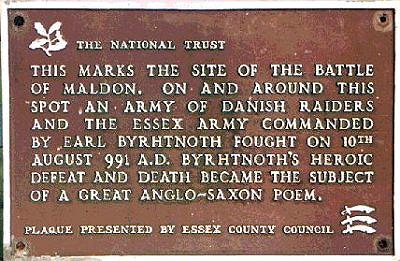
The second item I had to research was not a quote but a poem, a reference to The Battle of Maldon. Here's the reference:
Once he was actually astride the enemy's chest,, squeezing it's throat with both hands and - he found to his surprise - shouting a line out of The Battle of Maldon...
Here's a bit o' the poem:
Now room is meted you, come swiftly to us,
Warriors to war. Only God knows
Who at the end shall possess this fight's field.
I don't know if those are the lines Ransom shouts out during his battle with the enemy, but they seemed appropriate. If you're curious, here's the whole thing.
It goes without saying that if I were to write like Lewis, I'd also need his prodigious smarts.


Saturday, June 27, 2009

Saturday Morning Amuse Bouche

This is old. It's been on the internets since 2004, so you've all no doubt seen it cooler places than here. However, it's new to me, and I want to preserve it for my own future amusement, so I present to you Star Trek's The Trouble with Tribbles if it had been illustrated by Edward Gorey:
Click here for the whole thing.


Tuesday, June 23, 2009

Our Heroine Grows Wary of Jesuits in Outerspace

Hmmm...how to talk fairly about The Sparrow, the Jesuits-in-space book I have been reading for the last three days? My first response, after finishing the last page, was to fling the book disgustedly away from me spitting, "That was an atrocious mess!" But then I read comments by the authoress and I calmed down a little. Not enough to like or recommend the book, but I'm not spittin' any longer.

Here's the story: a radio telescope in Puerto Rico picks up a signal from a nearby planet which is clearly choral. Aliens are singing somewhere! The world erupts at the news, but in typical U.N. fashion, no one can decide if we should try to contact or visit the planet, who should go if we do, who should pay for it, etc. etc. etc. Meanwhile, the Jesuits, true to their long history as missionaries, secretly arrange a spaceflight of eight people (4 priests, 4 secular scientists) to the source of the music. Communications are lost after landing. Many years later, a sole surviving priest returns from the mission. What happened to him? To the rest of the team?

Again, and I know I've said this about other books - I love the idea. Love it. I am fascinated by the concept that if we ever did make contact with aliens (we won't), (but if we did) would the Church evangelize them? How would it be done? What would happen? I could read about stuff like that for years (Eifelheim, I love you!). And I think it's because I love the idea so much that this book was such a disappointment.

There were several things that annoyed me, but the biggest thing was the Jesuits themselves. They were basically Protestants, if not actually Pagans. Our hero, Fr. Emilio Sandoz, the lead Jesuit, has the worst conception of God a Catholic priest could have [emphasis mine]:

He found the life of Jesus profoundly moving; the miracles, on the other hand, seemed a barrier to faith, and he tended to explain them to himself in rational terms. It was as though there were only seven loaves and seven fishes. Maybe the miracle was that people shared what they had with strangers, he thought in the darkness.

He was aware of his agnosticism, and patient with it. Rather than deny the existence of something he couldn't perceive himself, he acknowledged the authenticity of his uncertainty and carried on, praying in the face of doubt. [snip] As D.W. Yarbrough once told him, "Son, sometimes it's enough to just act less like a sh*thead." And by that inelegant standard, Emilio Sandoz could believe himself to be a man of God.

So while he hoped someday to find his way to a place in his soul that was closed to him now, he was content to be where he was. [snip] What he'd been given was more than enough to be grateful for, whether or not God was there to receive or care about his prayers.

Er...I don't mean to mock religious doubt, but this man is a priest! He presumably went through 10 years of Jesuit training before ordination, and no one thought it troubling that he was an agnostic? What is he doing saying Mass if he doesn't believe in the miraculous?

It just got worse from there. I couldn't enjoy the story because the theology was so glaringly awful. The doctor at the Jesuit clinic in Puerto Rico is described as being a tremendous success, in part because she liberally distributes condoms and birth control; it felt like every third page was dedicated to ill-formed opinions about priestly celibacy being trotted out by various characters, including the priests themselves; and finally, MOST ANNOYINGLY, the Jesuits get to the planet, live there for years, and never once talk to the native inhabitants about God, Christ, salvation, or anything sacred. They went as missionaries, so WTF?

I can handle it if you think evangelizing is in bad taste. Or if you disagree with tenets of the Catholic Faith. Fine. But then why make the focus of the story the Jesuits? The group could have been entirely secular. Events on the planet would have unfolded in exactly the same way without the protagonists being priests.

The author, Maria Doria Russell, is a Catholic convert to Judaism, and she writes that the book's message is, "You can't know the answer to questions about faith, but the questions are worth asking and worth thinking about." Now, that is a fine statement in and of itself, it may be a statement compatible with Judaism (I don't know), but it's not compatible with Catholicism, so you can't use Catholicism to illustrate it without beating the Faith into an unrecognizable shape. In Catholicism, you absolutely can know the answer to questions about faith. You can know whether God exists. You can know that He loves you. You can't know everything, but you don't shrug your shoulders and accept doubt, either. So to hear this theme exposited via countless Jesuits really peeved me.*

My only consolation was that I don't think she meant to misrepresent the Catholic Faith. She admits in an interview that she knew no Jesuits, so she read biographies of priests who left the Church post-Vatican II (I'm sure she thought those were good sources, but, no.) and she sent her manuscript to a Jesuit-I-shall-not-name for review, and apparently he did not pass out from apoplexy but gave her a big thumbs up. My point is I believe she wrote in good faith. Nevertheless, while I think civilians may like the book just fine, practicing Catholics may experience blood-pressure issues. But I am also Neapolitan, so it could just be me.

* I don't mind stories about priests grappling with doubt (like Father Damien). What I mind is when it is made to appear that the Catholic Faith accepts doubt as the place where any thinking person would permanently land after considering all the evidence.


Father Marquette preaching to American Indians (now that's a missionary!)

Tuesday, June 16, 2009

Our Heroine Learns That Sometimes a Giant Martian Seal Creature is Only a Giant Martian Seal Creature

Sometimes, as a retired English-major (though not very good one), I make the mistake of looking for "meaning" in novels to the exclusion of all else. Not with all books, certainly not with beach reading, but mostly with books written by intellectuals. I don't suppose I am the only one who does this, though I wish it weren't so. Because, as in the case of Out of the Silent Planet, by C.S. Lewis, I occasionally come dangerously close to missing out on a terrifically magnificent adventure story because I'm just so fixated on tweezing out the "meaning" of it all.

First, the back o' the book plot summary:
Out of the Silent Planet begins the adventures of the remarkable [philologist] Dr. Ransom. Here, that estimable man is abducted [by two English adventurers] and taken via spaceship to the red planet of Malacandra [Mars]. Once on the planet, he eludes his captors, risking his life and his chances of returning to Earth. First published in 1943, Out of the Silent Planet remains a mysterious and suspenseful tour de force from one of our best-loved writers.
I mean, how dense am I? The back of the book practically smacked me upside the head with the announcement that this was an adventure, but I swear I spent the first quarter of the book trying to figure out what Lewis's game was. Was this book really about mythology vs. history? No? Allright, then was it really about the need for humility in science? Again no? Surely, if nothing else, it must be about Christianity, right? This is Lewis, after all. But I was wrong on all counts. It's not that there isn't a bit of mythology-as-history in there, and a sprinkling about the arrogance of a certain kind of scientism, and maybe even a jigger of Christianity in there. But that's just because Lewis wrote it, and these things color how he sees the world. In all honesty this book is just the story of a clever Oxford don who finds himself ON MARS, with two blokes who want to kill him, and how he uses his particular set of smarts to escape and survive on a strange, inhabited planet.

Once I let go and just enjoyed it as a story, I must say it was tremendous. There are at least three episodes that had me weak with suspense, and it was charming to read how space travel and Mars were imagined by someone who lived before NASA. And as one of the very first science-fiction novels, I was impressed by just how many of the hallmarks of the genre are already in place here, without any of the over-imagined bloat that I dislike in so many more modern sci-fi novels. It's beautiful, spare and exciting.

When I went hunting for an image to associate with this post, I got the video clip below in my search results. It's from the movie Shadowlands, and it made me feel worlds better about overthinking the book at first. "Far greater minds than mine," as you will see:

Thursday, June 4, 2009

Decorater Crabs Are Not Nearly As Cute As Our Heroine Remembered: Final Thoughts On Dune

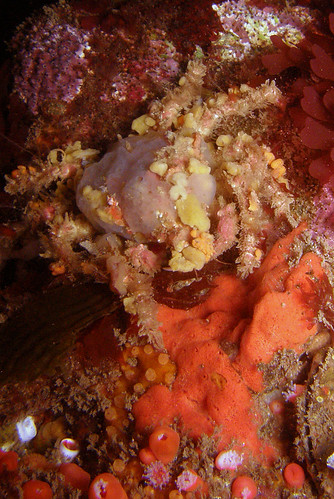
Do y'all remember learning about decorater crabs, perhaps from your childhood Ranger Rick subscription, or in an old Jacques Cousteau episode? Decorater crabs glue bits of detritus onto their shells in order to camouflage themselves from predators. (Don't worry if you don't remember, I attached a picture, a wee bit gross, towards the end. Crabs not trussed for the plate are kind of beetley-looking, I learned)

Anyhoodle, excepting the part about the predators, a solid and recognizable crab shell with a boatload of psychedelic detritus glued on the back is my final estimation of Dune. The fundamental story is a classic: through betrayal, a boy prince's family is destroyed and his inheritance is lost. He is adopted by a rugged, outcast people, with whom he grows-up and whom he unites into a fighting force that he ultimately uses to avenge his family and reclaim his inheritance. The final battle is hand-to-hand combat between young prince and villain. The story ends with the marriage of the young prince and a beautiful princess.

This is all good, right? We've seen this story before, or elements of it, and we always like it, right? Me too! But on top of that foundation was glued about 20lbs of new-age mysticism, Silent Spring-like ecological moralizing, and the psychedelic consciousness-raising drug that was the engine of the story. The final story looks a bit like this:


I know, I know! That makes me sound like a wrinkled-old prune who can't handle naughty bits. But that's not what bothered me. I don't mind drugs or sex or mysticism driving a story necessarily, it's just how tired and dated all of it seemed in this particular novel.

Ok, don't believe me? Read this:

Still, there was about him a feeling of abandonment. He wondered if it might be possible that his ruh-spirit had slipped over somehow into the world where the Fremen believed he had his true existence - into the alam al-mithal, the world of similitudes, that metaphysical realm where all physical limitations were removed. And he knew fear at the thought of such a place, because removal of limitations meant removal of points of reference. In the landscape of myth he could not orient himself and say, "I am because I am here."

Come again? I know that was supposed to be a big thought, but isn't it actually kind of insane and meaningless? Wouldn't you run away from this bloke at a party?

Anyhow. I've not much more to say on the subject. I know it's one of Science Fiction's great works, and as I said, I really liked the foundational story, but I don't think it aged well.

Next up may be Silence, or it may be a newstand copy of US Magazine. It's just too early to tell.

Friday, May 29, 2009

Despite the Unbecoming Attitude, Our Heroine Could Not Do Better

Y'all, have you ever found yourself sucked into a story, even though there are things about it that are unbelievably annoying? Like, you are reading this story, and you are shaking your head and grumbling, "sweetfancymoses" but you have to know how it ends (even though you can already basically guess how it ends). Y'all, that is Dune to me right now.

I HAVE TO KNOW WHAT HAPPENS TO PAUL ATREIDES!!!! (even though I am 100% certain I know what's going to happen to Paul Atreides)

I HAVE TO KNOW WHAT HAPPENS TO ARRAKIS!!!! (even though I am 100% certain I know what's going to happen to Arrakis)

But while I am staying up, into the wee hours, trying to get to the end so I can just find out what happens to *&%$# Paul Atreides and %@!*^ Arrakis, I am so annoyed at how coy Frank Herbert is being with me about certain things, particularly the Bene Gesserit and the Mentats. DEAR SIR, PLEASE JUST TELL ME STRAIGHT OUT WHAT THESE THINGS ARE ALREADY. STOP TEASING ME WITH HALF-HINTS. (I only yell because I love).

Ugh! I finally had to go look them up on Wikipedia, because I knew Dune nerds would have already written serious treatments of these subjects, and I was not disappointed. But here is a tip for authors everywhere: I should not need Wikipedia in order to understand your stupid (and simultaneously awesome) book.

Also, I want to write something more in-depth about this eventually, but I always have issues with books in which a complex imaginary political situation is described, and then the hero or villain explains how he is going to exploit the situation thusly: "If I do X, then because of this complicated treaty + complicated history + psychology , I will get Y outcome." And then he does get Y outcome. Because invariably, when that happens, I always think that based on what he's explained so far about the compicated treaty and the complicated history, psychology dictates a totally different outcome, or several possible outcomes. In that I basically think I would not behave the way the villain or hero KNOWS people will behave in those same circumstances. But then, when the other characters DO behave exactly the way the hero or villain predicted they would behave, I get annoyed because it makes it difficult for me to suspend my disbelief if I am ACTUALLY WATCHING YOU manipulate the scene.

Heavens! Aren't I just a grouchy Heroine this morning? Really, the book is totally entertaining, and I am obviously obsessing over it, which I wouldn't unless it was special, so I think it's time for me to pipe-down and have some tea.

Sunday, November 2, 2008

Our Heroine Makes a Political Endorsement

H.P. Lovecraft virgins, you can learn all about Cthulhu here.

Tuesday, June 24, 2008

Our Heroine Does Not Approve of Having a Very Special Message Hijack Her Movie About A Killer Virus

Y’all, I’m sorry. I got really excited about The Andromeda Strain remake on A&E, so I forgot my critical-thinking hat and blindly assumed it would be awesome. How could anything based on that book not turn out to be solid gold awesome? Even when I saw they had added a scrappy journalist to the plot, I remained hopeful. I like a good scrappy journalist! I do!

However, you may have noticed I never mentioned The Andromeda Strain again. And that was because Your Heroine was deeply ashamed, because it was awful. It was so awful I couldn’t finish watching it. It made a fine gray dust of despair settle on my soul for days, which only an intense regimen of cupcakes and shimmery lipgloss eventually cured. I was so depressed about it I could not even summon the energy to tell you all how much I hated it.

But I’m better now, and ready to thank Jonah Goldberg for doing what I could not. (Side note to Jonah: I hope you have cut your hair. It was looking a bit insane the last time I saw you on TV.)

The Paranoid Style -- From Outer Space!

...a couple months ago Ross [Douthat] had a very good piece in the Atlantic about how 70's paranoia is fashionable in film again. Unfortunately, the piece came out before the remake of The Andromeda Strain ran on A&E. My wife and I caught it the other night. Wow, what a horrible concatenation of clichés, plot holes, absurdities, and all around groan-inducing inanity (See the comments at IMDB for a taste). The casting has a real Love Boat feel, piling up out-of-work or between-gig fading TV stars, including some very talented ones (like Andre Braugher, who plays the Army General with his heart in the right place). Will from "Will and Grace" plays the heroic journalist. Imagine Rick Berke from the New York Times fighting off special-ops assassins in the desert...


Anyway, amidst all of the other cliches, it turns out that the real villain isn't the killer space bug, but the evil land-rapers, henchmen and dirty tricksters swirling around an unpopular president. Without spoiling too much, it turns out that there's a Very Important Environmental Message at the heart of the movie which falls on deaf ears in the corridors of the Military Industrial Complex but hopefully not on the rest of us.


That’s it in a nutshell. Of all the problems Jonah listed, what bothered me the most was the “very special message.” There is no special message in The Andromeda Strain. It is anti-special message, unless that message is, “It is bad, VERY BAD, to pry open military satellites that crash in your backyard. So, don’t do it!” But that’s not really a special message, that's just plain common sense.

Monday, June 23, 2008

Our Heroine Enjoys A Good Insect Alien Whomping As Much As The Next Girl

2008 was supposed to be many things for Our Heroine, but one thing she never expected it to be was the year in which she read ALOT of science-fiction, and maybe, sort of, liked it.

To wit: Orson Scott Card's Ender's Game, which is several hundred pages of military strategy and command training being hammered into the brain of a 6 year boy in the hopes that he alone will save the world from alien destruction, before he turns 12.

This book does not have "girl" written all over it. And yet...

I absolutely loved it! I read it in one day. Today is that day. The novel is very intense. The suspense was killing me. I was a very quiet car companion on the drive back from Vermont, because I had to know if Ender cracked under the training to which he was subjected, or became the greatest military commander in all of human history. I won't tell you. You should all read it.

I'm not sure what this means for the rest of my summer. I do have nice, civilized literature to read, and yet somehow I keep buying novels about scientist-soldiers struggling against insane challenges in the distant future. Very often these insane challenges involve, or in fact, ARE, insect aliens.

I do enjoy a good insect alien whomping. So maybe that explains it.

Actually, I have a theory, which I don't think is particularly original, that sci-fi writers can be especially frank or brave about describing the ills of humanity, because it's not really us they're describing. It's almost us, but it's not really us. It's a different us that we can feel disgusted with, or alarmed at, but not get defensive over, because it's the future, or an alternate universe, or against insane odds (read: insect aliens).

I'm not sure if that's why I am reading more sci-fi these days, but it is one reason to consider it if you never have before.

Even so, I promise my next book will be in the Canon. Even if it's the shortest of short stories, or just a teeny sonnet, Harold Bloom will have approved it!

But first: I need air conditioning.

Sunday, June 15, 2008

Our Heroine Utters A Literary "Whiskey Tango Foxtrot?"

I am a soft-touch for book clubs. I am. I am always wanting to start them and I am always wanting to join them. And this has never worked out well for me. One day, I will recount for you readers the tragi-comedy that was my short-lived Homer Book Club just so you all understand how organized reading groups and I don't mix. I think I either get over-excited (as with my Homer book club) or I get seriously under-whelmed (as with most every other book club I've ever joined) and in neither case is the club experience enriched by my involvement.

All this by way of introduction to my most recent book club membership, the Freebird Books Post-Apocalyptic Movie and Book Club. It's a book club being run out of a little independent book store in Redhook, and the idea is we get together once a month to discuss a piece of Science Fiction set on some sort of post-apocalyptic Earth. We discuss themes, imagery, symbolism, plot structure, etc., over wine and cookies, and then we go next door to watch a movie, also post-apocalyptic, that has similar themes to the book. So far, so good.

The June discussion I can't attend because I'm out of town, so I thought I would get started on July's read, which is Dhalgren, by Samuel R. Delany.

Tonight, I curled up on my couch with a nice, lemony Diet Coke and my book and I read seven pages and put the book down and thought to myself, quite literally, "Whiskey Tango Foxtrot?"

What just happened to my protagonist? Was he just crouching in a shrub, and did he just...er...you know... with an Asian lady who also happened to be a tree? And did he get dressed in a prism chain afterwards? And if so, huh? And did I actually read this line, "It is a city of inner discordances and retinal distortions."

Thoroughly confused, I decided to read the foreward by William Gibson to see if he could tell me what the heck this book was about, and this is what I read,

...Delany, equipped with the accumulated tool-kit of literary modernism, heads straight for the edges and borders and unacknowledged treaties of the consensual act of fiction. And, most remarkably - almost uniquely, in my experience - he succeeds; the text becomes something else...

Oh, golly. I hate when the text becomes something else. Mostly I just like it when it stays text.

Then,

I distrust few things more deeply than acts of literary explication.
Here is a book. Go inside.
It's your turn now.
Circular ruin.
Hall of mirrors.
Ring of flesh.
The smoldering outskirts reconfiguring with each step you take.
Bellona.
Remember me to them.

That's the foreword, dear readers. That's what I'm relying on to help clarify what I'm about to read. Now my head hurts.

Also, I think I learned that it's supposed to be a metaphor for the Sixties. Circular ruin, indeed. I don't think I want to read this anymore.

Am I wrong? Should I display austere self-discipline and finish the thing? Or should I wait to redeem myself in August, and in the meantime read some Wodehouse?
Into the face of the young man who sat on the terrace of the hotel at Cannes there had crept a look of furtive shame, the shifty, hangdog look which announces that an Englishman is about to talk French.

Tuesday, May 20, 2008

Our Heroine Would Not Tamper with a Downed Satellite If She Were You


When I was in high school, I somehow got my hands on a copy of Michael Crichton's The Andromeda Strain. I don't know why I read it then, considering that the only books I wanted to read in high-school involved brooding heroes with wounded souls being saved by plain but sassy governesses in country houses.

But I did read it, and it was Michael Crichton's first novel, written (I think) while he was still at Harvard Medical School and before he went all Hollywood and started sticking precocious kids in every book because he's really just scripting a movie.

This book was serious, hard-core, written entertainment, laced perfectly with that ol' Aristotelian fear that, "This could happen to me."

My Pumpkins, I cannot express accurately how reading that book for the first time made me feel. It sticks in my head as one of the most exciting reading experiences of my entire life. I mean, I missed my bus stop - several times - because I was so engrossed. I didn't talk to my girlfriends for days; I just wanted to be alone to read. The book is perfect entertainment. It's really just perfect. I don't want to give too much away, but the plot involves a satellite, a collision in outer space, a top-secret government lab and a mysterious something that wreaks apocalyptic levels of death.

The book is probably my favorite science-fiction novel, and easily among the top 10 most enjoyable books I have ever read. It's totally believable. I reread it, and while the technology now seems dated, the premise still makes perfect sense.

Why am I raving about this now? Because the super-geniuses at A&E have brilliantly decided to (re)make Andromeda Strain as a movie which airs this weekend. When I saw the commercial a little while ago, I threw my cat off my lap and started running around my apartment, shrieking. And I am going down to the 7-11 when I'm done posting this to celebrate with a nice, lemony Diet Coke.

I know it's science-fiction, but will you ladies watch it if I tell you that Benjamin Bratt is playing hero-scientist, Dr. Jeremy Stone? (Megan, there are no insecty-alien creatures like the last science-fiction thing I tried to foist on you.)

Anyhoodle, before I sign off with one last whoopee of excitement, I must confess that every random science career I've ever imagined for myself was spawned from reading The Andromeda Strain, in which all the scientists were tough and smart and brave and patriotic and willing to sacrifice their lives to save the world. Sadly, I just can't do math in my head, so the science life was not to be for me.

Wednesday, March 12, 2008

The Golden Age -- What Happened?

This is not a real post y'all, just an update to explain why I never posted again on The Golden Age, like I wrote that I would.

The book is part of a trilogy, and in a hard-core way; the hero, Phaethon, just figured out that he owns an incredible starship, and is walking towards it when the book just ended.

That's it. I won't know a thing more til I read the next installment.

So, there's not much to say until I get to Phoenix Exultant, which is Part II. Right now, my hero is just walking, and that's healthy, and I'm happy for him, but it's not inspiring me to write any of my normal, overblown blog musings.

Stay tuned, he'll reach the ship eventually.

Saturday, March 1, 2008

Our Heroine Is Kind Of A Coward


Ok, so, I'm reading a science fiction novel. Real, honest-to-goodness science fiction. (I KNOW, it's weird to me too, it's not normally my thing.) It called The Golden Age, about an interplanetary Utopian society. The author is John C. Wright, who converted from secular atheism to Catholicism, and for whom I have recently developed a soft spot.

I'm totally enjoying it, and I'll write more about it later, but I did want to comment on the state of the story thus far. The book asks the reader to consider this question: pleasure or truth? That's a great question, right? It's a version of the only question worth asking. Is it better to be well-regarded; popular; loved; successful; rich; immortal, even, with unlimited access to every lawful pleasure; than to have the Truth without them?

Since I already know a little about Mr. Wright's philosophy, I'm confident of what he thinks is the answer. But what is particularly interesting to me, is reading how this dilemma plays out in the Utopian world Wright has created. I mean, if his hero chooses Truth, he essentially loses Paradise. And, unlike the author, the hero has no religion, no, "Not this life, but the life hereafter" philosophy. If he does what I think he will do, I wonder: would I be so brave in the same circumstances? See headline of post, if you have any doubts.

Wednesday, April 18, 2007

Our Heroine Sheepishly Confesses She has Wandered Off-Track Again

Ok, ok, people! (especially BMT) I know I owe y'all an Iliad post. I know this. I promise I have been reading The Iliad and I have thoughts. They aren't great thoughts, or even particularly interesting, but, such as they are, they are ready to share.

It's just, well, Eifelheim arrived in the mail this weekend, and I thought to myself, "Self, why don't you just read few pages of this, to see if it's any good, and then you can easily go back to the men of Troy?" So I peeped page one, and, I'm sorry, but I can't stop.

Can I tell you why I'm loving it so much? I am loving this book because the author is a master of dramatic tension, in particular, dramatic irony. Seriously, my sense of coming tragedy began with the tone of resignation in the opening monologue.

The reader is made aware immediately (practically from the dust-jacket) that something terrible, genuinely unimaginably terrible, is going to happen to the people of Eifelheim. There's no secret to the fact that whatever it is, it's likely the result of the Black Death and aliens mixing (don't smirk). But, as curious as the reader may be about what exactly the mechanism of the town's destruction is going to be, curiosity takes a back seat to her growing distress over the fate of the characters. Why? Because, so far, each of the inhabitants of Eifelheim is struggling to behave in as noble and Christian a manner as his experience and disposition permits, in confusing and stressful circumstances. Yet the reader knows this same nobility must mean, ultimately, everyone's destruction. Do you know how hard that is to read, and yet, how impossible that is to not read? I keep hoping everyone is going to fly off into outerspace, holding hands and drinking tankards of ale, and yet every page indicates to me that this is just not going to happen. I have never wanted so badly to be proved wrong.

I also am having to read it with a dictionary because the author's vocabulary is ridiculous. This makes me feel first, stupid, and then, smart.

And here's a tip for my readers who are "horrific grasshopper alien" snobs, and so don't give a good dadgum what anyone has to say about "tension" and "tragedy" and "dramatic irony," so long as aliens were used to create them: have you people listened to Neil Finn's, "She Will Have Her Way" recently? No? Then go rock out to it immediately (AFTER you pay your taxes).

Tuesday, April 3, 2007

Our Heroine Confesses to a Guilty Pleasure

Y'all, it's about as far from the Western Canon as one can conceivably get and not be People Magazine, but I am really psyched to get my copy of Tom Flynn's Eifelheim:

A present-day scientific odd couple who are longtime domestic partners, physicist Sharon Nagy and historian Tom Schwoerin look into the fate of the Black Forest village of the title, which apparently vanished in the plague year 1348, in Flynn's heartbreaking morality play of stranded aliens in medieval Germany. Most of the narrative focuses on the consequences of the discovery in the 14th century by Eifelheim's pastor, Father Dietrich, of a crashed space ship carrying the "Krenken," horrific grasshopperlike aliens.

So, we have a novel involving a historical mystery, the Middle Ages, interdimensional travel (not the same thing as time travel, y'all), a priest, and, oh yeah, some aliens. Clearly, this book is made of awesome, right? Now, I know some of you probably laughed out loud at the phrase "horrific grasshopper aliens" but I am telling you that if you are a horrific grasshopper alien snob (as many people are) you are going to miss out on some solid gold awesome story-telling.

However, if you are afraid your Nietzsche-reading hipster friends are going to mock you mercilessly should you get caught with sci-fi, don't worry, you can still sneak an Eifelheim fix here, our heroine won't tell.