Showing posts with label C.S. Lewis. Show all posts

Tuesday, June 30, 2009

Thoughts from Elsewhere

From C.S. Lewis:

In King Lear (III:vii) there is a man who is such a minor character that Shakespeare has not given him even a name: he is merely "First Servant." All the characters around him-Regan, Cornwall, and Edmund-have fine long-term plans. They think they know how the story is going to end, and they are quite wrong. The servant has no such delusions. He has no notion how the play is going to go. But he understands the present scene. He sees an abomination (the blinding of old Gloucester) taking place. He will not stand it. His sword is out and pointed at his master's breast in a moment: then Regan stabs him dead from behind. That is his whole part: eight lines all told. But if it were real life and not a play, that is the part it would be best to have acted.

Indeed.

Monday, June 29, 2009

May I Have a Word?

The book that sends me to the dictionary today is Perelandra, by C.S. Lewis. But first: I have decided that if I could write like any author who has ever lived, I would choose Lewis. Surprising, ne'st pas? But it's true. His language is modern, clear and strong, and his analogies are a source of terrible envy. They are razor sharp, and when he employs one, you always understand his concept better. He never wastes words or rambles (a terrible habit of mine), and though his writing is very rugged, he can still be beautiful.

So, something to consider today. Who would you write like if you were given the option?

In the meantime, Perelandra is no Herculean task like A Thread of Years, but I did have to look up mandrill, which Merriam-Webster defines as "a large baboon (Mandrillus sphinx syn. Papio sphinx) of central Africa west of the Congo River with the male having a bright red and blue muzzle."

The quote:
He remembers seeing the Enemy for a moment looking not like Weston, but like a mandrill, and realising almost at once that this was delirium.
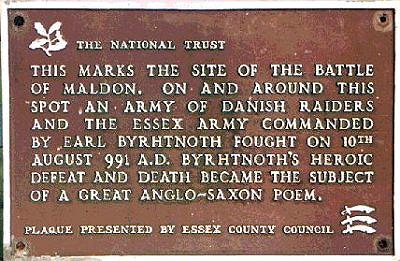
The second item I had to research was not a quote but a poem, a reference to The Battle of Maldon. Here's the reference:
Once he was actually astride the enemy's chest,, squeezing it's throat with both hands and - he found to his surprise - shouting a line out of The Battle of Maldon...
Here's a bit o' the poem:
Now room is meted you, come swiftly to us,
Warriors to war. Only God knows
Who at the end shall possess this fight's field.
I don't know if those are the lines Ransom shouts out during his battle with the enemy, but they seemed appropriate. If you're curious, here's the whole thing.
It goes without saying that if I were to write like Lewis, I'd also need his prodigious smarts.


Tuesday, June 16, 2009

Our Heroine Learns That Sometimes a Giant Martian Seal Creature is Only a Giant Martian Seal Creature

Sometimes, as a retired English-major (though not very good one), I make the mistake of looking for "meaning" in novels to the exclusion of all else. Not with all books, certainly not with beach reading, but mostly with books written by intellectuals. I don't suppose I am the only one who does this, though I wish it weren't so. Because, as in the case of Out of the Silent Planet, by C.S. Lewis, I occasionally come dangerously close to missing out on a terrifically magnificent adventure story because I'm just so fixated on tweezing out the "meaning" of it all.

First, the back o' the book plot summary:
Out of the Silent Planet begins the adventures of the remarkable [philologist] Dr. Ransom. Here, that estimable man is abducted [by two English adventurers] and taken via spaceship to the red planet of Malacandra [Mars]. Once on the planet, he eludes his captors, risking his life and his chances of returning to Earth. First published in 1943, Out of the Silent Planet remains a mysterious and suspenseful tour de force from one of our best-loved writers.
I mean, how dense am I? The back of the book practically smacked me upside the head with the announcement that this was an adventure, but I swear I spent the first quarter of the book trying to figure out what Lewis's game was. Was this book really about mythology vs. history? No? Allright, then was it really about the need for humility in science? Again no? Surely, if nothing else, it must be about Christianity, right? This is Lewis, after all. But I was wrong on all counts. It's not that there isn't a bit of mythology-as-history in there, and a sprinkling about the arrogance of a certain kind of scientism, and maybe even a jigger of Christianity in there. But that's just because Lewis wrote it, and these things color how he sees the world. In all honesty this book is just the story of a clever Oxford don who finds himself ON MARS, with two blokes who want to kill him, and how he uses his particular set of smarts to escape and survive on a strange, inhabited planet.

Once I let go and just enjoyed it as a story, I must say it was tremendous. There are at least three episodes that had me weak with suspense, and it was charming to read how space travel and Mars were imagined by someone who lived before NASA. And as one of the very first science-fiction novels, I was impressed by just how many of the hallmarks of the genre are already in place here, without any of the over-imagined bloat that I dislike in so many more modern sci-fi novels. It's beautiful, spare and exciting.

When I went hunting for an image to associate with this post, I got the video clip below in my search results. It's from the movie Shadowlands, and it made me feel worlds better about overthinking the book at first. "Far greater minds than mine," as you will see:

Monday, June 15, 2009

Just Something to Think About as You Go About Your Business

God has paid us the intolerable compliment of loving us, in the deepest, most tragic, most inexorable sense." - C. S. Lewis


I love C.S. Lewis and he's been on my mind the last two days because I am reading Out of The Silent Planet, which is Book I of his Space Trilogy. I'll have more to say about it tomorrow, most likely, but in the meantime I was thinking of all the great quotes I've cribbed from Lewis over the years for my quote journal, and the above was a leading candidate.